
I’ve Been Collecting for 25+ Years. Here’s What Actually Protects Expensive Cards

I acquired my first Magic: The Gathering cards in the late 90s from some friends in the neighborhood. Since then, I have bought, traded, sold, and stored more cardboard than I ever thought possible. My collection now sits north of 50,000 MTG cards, ranging from bulk commons to pieces that make you rethink where you store them (ask me on social to see my storage system), as well as a few thousand Pokemon cards, and a smattering of Digimon.
Over the years, I have learned a simple truth. Most damage does not come from dramatic accidents. It comes from small, preventable mistakes repeated over time. If you have expensive trading cards, protecting them is less about one big decision and more about stacking smart habits.
Start With the Right Sleeves
Yes, you should sleeve valuable cards. But the quality and method matter more than people think. For cards that see play, I always use a high-quality inner sleeve paired with a premium outer sleeve. The small trick that makes a real difference is how you insert them. Put the card upside down into the inner sleeve, then place that into the outer sleeve right side up. This creates a near seal at both openings and significantly reduces dust and moisture exposure over time. You know, in case your slightly inebriated friend decides to spill their beverage on the table.
Another overlooked detail is sleeve maintenance. Sleeves cloud, warp, and trap debris as they age. If you play regularly, replace them more often than feels necessary. Tiny bits of stuff inside worn sleeves can create micro scratches over months of shuffling. And even with sleeves, avoid sliding cards across a table. It seems harmless, but repeated friction is one of the most common causes of subtle surface wear.
Choosing the Right Holders for Storage
Toploaders are excellent for shipping and short-term protection, but they are not always ideal for long-term storage. For valuable singles that are not being graded, I prefer a sleeved card inside a semi-rigid holder stored in a snug box. Semi-rigid sleeves apply less concentrated corner pressure and reduce the risk of edge wear over time.
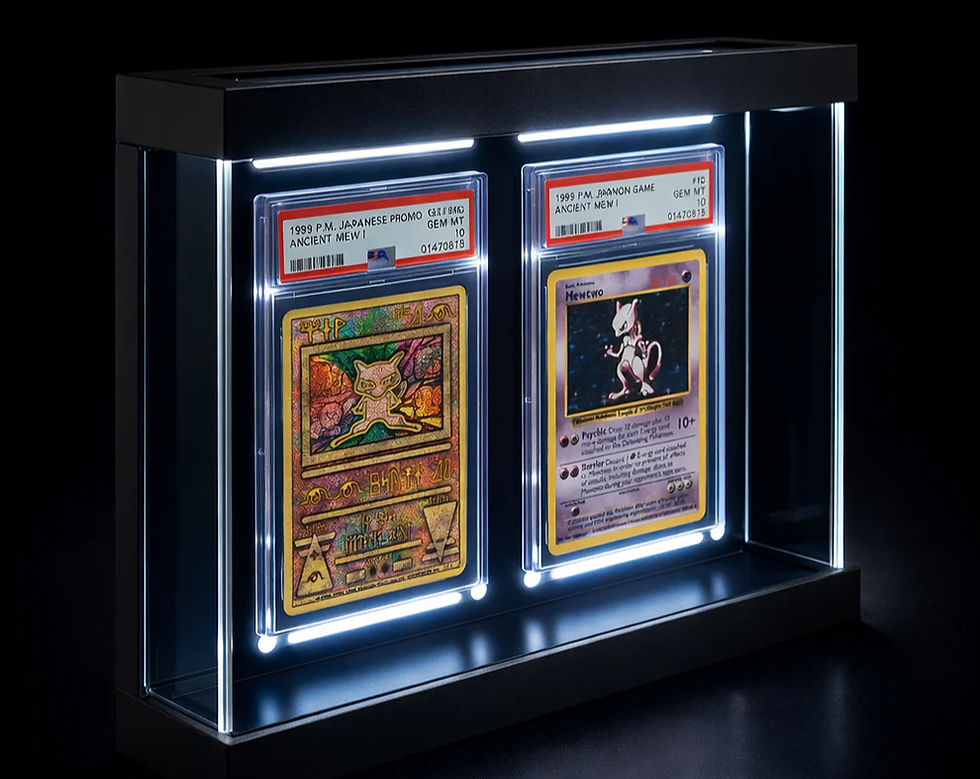
For higher-end pieces, beautifully displayed graded slabs or magnetic one-touch holders are strong options. If you use a magnetic holder, make sure it is sized correctly and consider keeping the card in a sleeve unless the holder is designed for a raw fit. Cards can shift slightly inside oversized holders, and that movement can cause edge friction. Also, avoid stacking loose top loaders in drawers. Even minimal shifting can lead to corner dings that quietly chip away at value.
Control the Environment First
The biggest threat to expensive cards is not handling. It is the environment. Cards are paper, and paper reacts to temperature and humidity. If you live in a humid climate, a small dehumidifier in your storage room is one of the best investments you can make. Stability matters more than perfection. Rapid swings in humidity can cause warping and curling, especially with foils.
Basements are risky unless fully climate controlled, since they invite moisture and subtle mold issues. Attics are worse because of heat cycles. Interior closets in temperature-stable rooms are often safer than people assume. I also keep silica gel packs in storage boxes and rotate them periodically. They do not last forever, and once saturated, they stop helping.
This should go without saying, but never leave valuable cards in your car. The temperature swings alone can warp foils in a matter of days.
Binders Are Convenient but Not Perfect
Binders are great for trading and displaying cards, but they are not always ideal for long-term storage of expensive pieces. If you use binders, choose side loading pages inside zipper sealed binders with padded covers. Avoid ring binders for high value cards since pressure points can form over time. Cheap binder pages can also degrade and potentially leach materials into cards.
How you store binders matters as well. Storing them vertically is safer than stacking them flat. When stacked horizontally, the weight of multiple binders can press unevenly on pages and lead to subtle bending. It is also a good idea to rotate especially valuable cards occasionally. Cards that sit in the same pocket for years can develop slight impressions from the page texture.
Separate Play Copies From Collection Copies
One lesson I learned later than I should have is to separate play copies from collection copies. If you own a high value staple, consider maintaining two copies. One stays pristine in storage while the other goes into decks. Constant shuffling and handling, even in sleeves, gradually creates edge whitening and surface wear.
When a card spikes in value, I pull my cleanest copy out of rotation and replace it with a more played version. I will even condone proxying cards, but I only proxy cards that I already own. That small shift has preserved significant value across dozens of staples in my collection.
The Small Things That Cause Big Damage
Some of the worst damage comes from things people rarely think about. Rubber bands will permanently indent cards. Sticky notes can leave residue or impressions. Cheap deck boxes with rough interior seams can catch the edges of sleeved cards. Foils stored too tightly can develop curvature that presses against binder pages.

Protection is often about removing friction points. Fewer pressure spots, fewer environmental swings, fewer unnecessary touches. Each small improvement compounds over time.
Insurance and Documentation Matter
If you have a serious collection, protection also means thinking beyond physical storage. Many standard homeowner policies do not fully cover collectibles without a rider. Specialized collectibles insurance can be surprisingly affordable compared to the value it protects.
Keep a digital inventory with photos and approximate values. It does not need to be perfect or updated weekly. It just needs to exist. In the event of theft, fire, or water damage, documentation is as important as sleeves.
Consistency Over Perfection When Protecting Your Cards
After more than two decades and 50,000-plus cards, I can confidently say there is no single product that guarantees safety. Collections that age well belong to careful collectors who build consistent habits. Sleeve properly. Store upright. Manage humidity. Keep food and drinks away from the table. Check on your storage space a few times a year.
If you treat your cards like assets, they tend to hold up like assets. You can still shuffle them up and enjoy the game. Just make sure you think about protecting them as much as you think when you cast them.


Comments