
MTG Commander Brackets Just Got an Update: What it Means for Your Decks

The Commander Format Panel has been busy. After months of playtesting, feedback, and a full-on summit in Renton, they’ve rolled out a fresh update to the Commander Brackets system and the Game Changers list. If you’ve been using the brackets to find balanced games or just trying to figure out where your deck fits, this update brings some welcome clarity.
Let’s walk through what changed, why it matters, and how it might shift the way we build and play Commander going forward.
Brackets Get a Tune-Up
The Brackets system has been around for a while now, helping players match decks by power level and set expectations before games start. It’s been working well overall, but the panel saw a few spots that needed tightening up.
First, they’ve added clearer guidelines for what each bracket should feel like. Instead of vague phrases like “no early-game combos,” we now get turn-based expectations. For example, Bracket 3 decks should expect to play at least six turns before the game ends. That means combos that consistently win before turn six probably belong in a higher bracket.

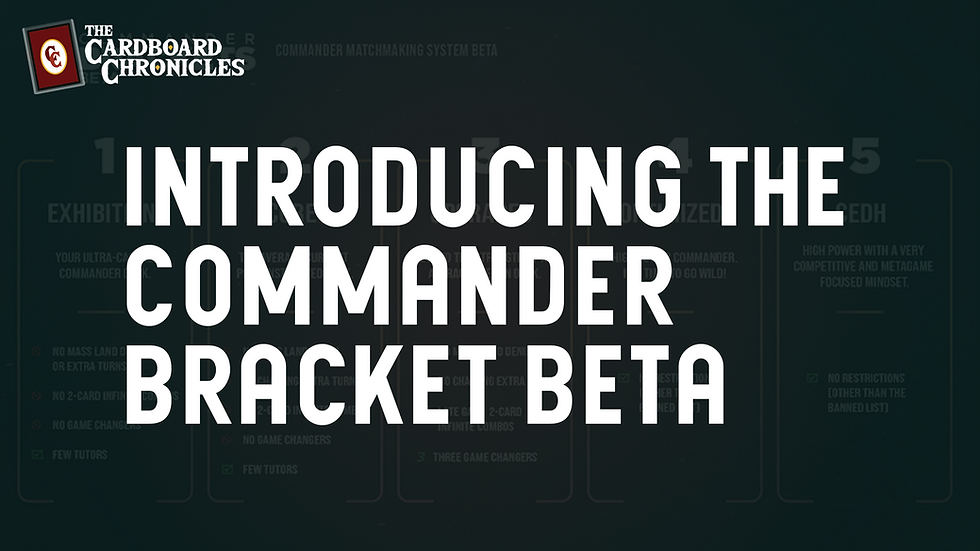
They’ve also adjusted the bracket names and descriptions to better reflect intent. Bracket 1, now called Exhibition, is all about theme over power. Bracket 2, Core, is no longer tied to preconstructed decks, since precons vary wildly in strength. Bracket 3, Upgraded, remains the most popular middle ground, while Brackets 4 and 5 cover optimized and cEDH territory.
Tutors and Turn Timers
One of the more debated topics, tutors, got a major change. The panel decided to remove tutor restrictions from the brackets entirely. Instead of trying to define what counts as a tutor or how many are “too many,” they’re relying on the Game Changers list to flag the most efficient ones.
This shift puts more focus on how tutors affect gameplay rather than just how many you run. If your deck uses tutors to find combo pieces and win early, it’s probably not a fit for the lower brackets. But if you’re grabbing a land with Expedition Map or a creature with Eladamri’s Call, that’s less of a concern.
Game Changers List Gets a Trim
The Game Changers list also saw a big update. After expanding it earlier this year, the panel realized they’d gone a bit overboard. Too many flagged cards made it hard for players to track what mattered most.
So they’ve removed several cards, especially those with high mana costs or those that are only problematic as commanders. Here’s a quick look at what got cut:
Expropriate
Jin-Gitaxias, Core Augur
Sway of the Stars
Vorinclex, Voice of Hunger
Kinnan, Bonder Prodigy
Urza, Lord High Artificer
Winota, Joiner of Forces
Yuriko, the Tiger’s Shadow
Deflecting Swat
Food Chain
These removals reflect a shift in philosophy. The panel wants the list to focus on cards that warp games early or create unfun experiences across pods. High-cost spells and commanders that are easy to identify and discuss don’t need to be flagged the same way.
How This Changes the Commander Landscape
This update does more than clean up a list, it reshapes how we talk about power levels and build decks. By focusing on turn-based expectations and removing vague restrictions, the Commander Brackets system becomes more intuitive. Players can now say, “This deck tends to win around turn seven,” and have that mean something.
It also gives more breathing room to creative deckbuilders. Cards like Food Chain and Deflecting Swat, while powerful, no longer carry the same stigma. That opens the door for more experimentation in mid-power pods without triggering alarm bells. It may also open the door for some previously banned cards to make their way off the list.
The removal of tutor limits is another big shift. It encourages players to think about how their deck plays, not just what’s in it. That’s a subtle but important change, especially for people who want to build consistent decks without being lumped into high-power territory.
Overall, this update nudges Commander toward a more flexible, conversation-driven format. It rewards transparency and intent over rigid rules, which is exactly what makes the format so popular.
What Comes Next for Commander Brackets?
The panel isn’t done yet. They’re still collecting feedback on topics like hybrid mana rules, the role of Rhystic Study, and whether a sixth bracket might help fine-tune the system. Another update is expected early next year, along with a rotation of panel members.
For now, it’s a great time to revisit your decks, reclassify your builds, and maybe dust off a few cards that were previously benched. Commander is still about fun, creativity, and shared experiences, and this update helps keep it that way.




Comments