
The Top 5 Most Impactful Magic: The Gathering Sets of All Time

In Magic: The Gathering, best and most impactful are two very different things. Some of the most beloved sets ever printed barely dented the competitive landscape. Some of the most impactful Magic sets of all time were genuinely miserable to play against. This list is purely about which sets changed the game most drastically and permanently, for better or for worse. Let's go!
1. Alpha / Beta / Unlimited (1993)
Nothing on this list comes close and nothing ever will. You have to start with Alpha, where Magic: The Gathering was born. It shipped with the Power Nine baked right in. Black Lotus. Ancestral Recall. Time Walk. The Mox family. Cards so unfathomably powerful now that thirty years of design philosophy has essentially been one long attempt to make sure nothing like them ever sees print again. The game was invented and immediately handed a loaded weapon.

Alpha also established the DNA for every rule, mechanic, and format that followed. The Reserved List, the secondary market, the competitive scene, the casual kitchen table scene, all of it traces directly back to 1993. You cannot talk about Magic's impact without starting here because there is no Magic without Alpha and the reprints. It is not just the most impactful set. It is the only set that had to exist for any of this to be possible.
2. Urza's Saga (1998)
If Alpha built Magic, Urza's Saga nearly destroyed it. Urza's block is considered one of the most powerful blocks ever printed, with so many broken cards and combos running amok in tournament formats that what followed became known as Combo Winter. Tolarian Academy. Yawgmoth's Will. Memory Jar. Windfall. Recurring Nightmare. Cards so nasty that games were regularly decided on turn one by whichever player won the coin flip. Tolarian Academy and Windfall were banned in December 1998, but banning Tolarian Academy only created more combo decks in its place and Combo Winter continued.

The situation became so dire that the CEO of Wizards of the Coast threatened to fire the entire R&D team if they ever broke the constructed environment that badly again. That threat had consequences. The humbling of Urza's Saga directly shaped how Wizards approached power level for the next two decades. It also introduced Cycling, produced some of the most iconic Legacy and Vintage staples ever printed, and established that artifact-focused strategies could be genuinely terrifying. The set that almost killed Magic ended up making it stronger and the game is better for it.
3. Mirrodin (2003)
Mirrodin introduced Equipment as a permanent card type, gave the game its first genuine artifact-centric identity, and then watched helplessly as Affinity consumed Standard so completely that Wizards had to ban eight cards at once to even begin addressing the problem. Eight. In one announcement. That is a record that still stands and probably always will. The artifact lands were the main culprit, enabling a deck that could consistently put a full board on the table by turn two and attack for lethal before most opponents had done anything meaningful.

What makes Mirrodin genuinely impressive rather than just historically notorious is that it produced cards that are still showing up in competitive formats today. Skullclamp. Arcbound Ravager. Glimmervoid. Chrome Mox. These are not novelties or curiosities. They are active participants in Legacy, Modern, and Commander decades after their printing. A set can break a format and still be great. Mirrodin is the proof.
4. Innistrad (2011)
Impact is not always about breaking things. Sometimes it is about setting a standard so high that everything after it gets measured against it, and that is exactly what Innistrad did. It introduced double-faced transforming cards, a mechanic that has since become a core design tool used across dozens of sets. It defined what a thematic Magic set could feel like at its absolute best, building a complete Gothic horror world where every card felt like it belonged in the same story. And then it backed all of that up with a card quality that was top-shelf.
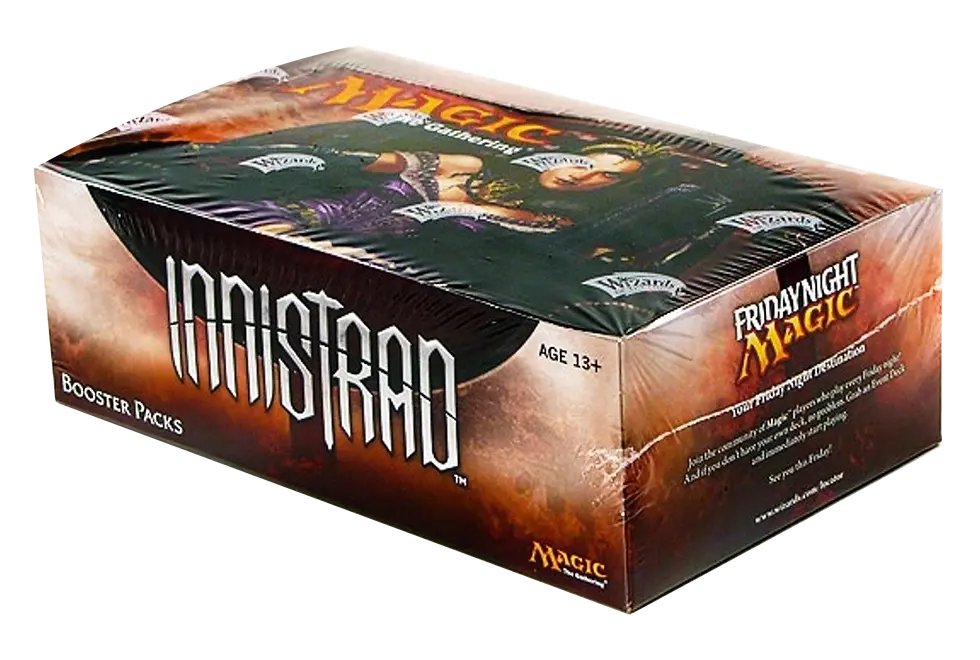
Snapcaster Mage alone changed how blue control decks are built in every format that allows it. Liliana of the Veil became the defining planeswalker of the Modern format for a full decade. Delver of Secrets, Geist of Saint Traft, Champion of the Parish. The density of format-defining cards in a single set is almost unreasonable in retrospect. Innistrad did not just produce good cards. It changed what players expected a set to be, and every set released since has been in some way compared to it whether the designers wanted that or not.
5. Modern Horizons (2019)
Every set before Modern Horizons had to pass through Standard on its way into Modern. Cards got dripped in and tested at a lower power level first, and only the ones that survived the gauntlet made it into the format. Modern Horizons threw that entire system out and printed cards directly into Modern at a power level that Standard would never have tolerated for a single rotation. The results were immediate. Wrenn and Six. Force of Negation. Urza, Lord High Artificer. Hogaak, Arisen Necropolis, which got banned within weeks. The format reshuffled almost overnight.

The longer term impact is arguably even bigger than the individual cards. Modern Horizons invented a product category that did not previously exist, the direct-to-eternal-format injection set, and Wizards has returned to it twice since with Modern Horizons 2 and Modern Horizons 3. Each one has helped to reshape the competitive landscape of Modern, Legacy, and Commander in ways that linger for years. The game before Modern Horizons and the game after it are measurably different things, and the ripple effects are still being felt right now at tables everywhere.
The Most Impactful Magic: The Gathering Sets of All Time
What makes a Magic set truly impactful is not just the cards it produces or the formats it warps. It is whether the game looks different on the other side of it. Alpha gave us the game itself. Urza's Saga taught Wizards what happens when power level goes completely unchecked. Mirrodin proved that breaking a format and defining one are not mutually exclusive. Innistrad set a creative standard that the design team is still chasing. Modern Horizons rewrote the rules of how sets are even allowed to interact with competitive formats.
Every one of these sets left a mark that is still visible today, no matter if you're drafting, playing Commander at a kitchen table, or grinding a Modern tournament. The most impactful Magic: The Gathering sets of all time are not necessarily the ones you remember most fondly. They are the ones that made the game impossible to ignore, for everyone who played through them and everyone who came after. That is a harder thing to achieve than simply being great, and these five sets managed it in ways that thirty years of Magic has not been able to wash away.
Honourable mentions: Ravnica: City of Guilds for building the two-color framework the game still runs on today. Khans of Tarkir for bringing back fetchlands and permanently altering Modern's mana base. Lord of the Rings for proving Universes Beyond could produce genuinely format-defining cards while breaking every sales record in the game's history at the same time.


Comments