
Yu-Gi-Oh Genesys Format Explained: YCS Columbus Just Changed Everything

The Yu-Gi-Oh Genesys format just had its first full-scale North American main event at YCS Columbus on May 23-24, 2026, and the result was the kind of cinematic Yu-Gi-Oh moment that the community had been quietly waiting on for almost a decade. Stanley Huang took down the tournament running Red Dragon Archfiend, beating William Conner Wesley in the finals with a deck built around a card that has not been competitively viable in standard Yu-Gi-Oh in years. The Top 4 had a Voiceless Voice deck and a second Red Dragon Archfiend. The Top 8 had Mimighoul. Cards and archetypes that nobody at a standard YCS would seriously consider running suddenly mattered again, and the entire competitive Yu-Gi-Oh world is now paying attention.
If you have been hearing duelists talk about Genesys all year and you have not fully wrapped your head around what it actually is, here is the complete breakdown of the format, what makes it different, and why YCS Columbus was the moment Genesys stopped being an experiment and started being the future.
What Is the Yu-Gi-Oh Genesys Format
The Yu-Gi-Oh Genesys format is an officially sanctioned alternate tournament format for the Yu-Gi-Oh Trading Card Game, launched by Konami on September 22, 2025. The format follows standard Yu-Gi-Oh dueling rules with four fundamental differences that completely change how decks are built and played.
First, Pendulum Monsters and Link Monsters are not allowed. All other card types including Synchros, Xyz, Fusions, and Rituals remain legal. This rule alone removes roughly 800 cards from the legal pool and pulls the game back to a power level that the community broadly considers more readable and more interactive.
Second, there is no Forbidden and Limited List. Every card not banned by the Pendulum or Link rule is legal at the standard 3-copy limit, including cards that have been forbidden in standard play for years.
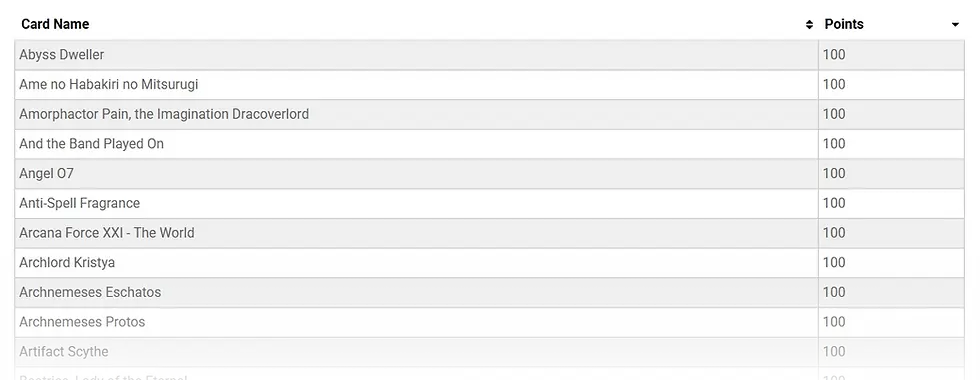
Third, deck construction uses a point system. Each card has a point value between 0 and 100 assigned by Konami, with most cards costing zero points and the most powerful staples costing the highest values. The total point cost of your Main Deck, Extra Deck, and Side Deck combined cannot exceed the tournament point cap.
Fourth, the standard point cap is 100 points, but tournament organizers can run events at any cap they choose, including 0 points. Lower point caps create lower-power formats where iconic older archetypes can shine. Higher point caps push toward modern decks.
Together, these four rules create a format that feels meaningfully different from standard Yu-Gi-Oh while still being recognizably the same game. The old game field returns, with no Extra Monster Zones or Pendulum Zones. Old archetypes get viable again. Long-time players who quit because the game got too complex have a real reason to come back.
How Stanley Huang Won YCS Columbus With Red Dragon Archfiend
Stanley Huang's winning deck at YCS Columbus was a Red Dragon Archfiend build that leveraged the format's point system to load up on powerful older cards while still hitting the Synchro lines that make the archetype function. The deck made meaningful use of the lack of a Forbidden and Limited List by running cards that have been locked away from competitive play for years in standard Yu-Gi-Oh.

The finals against William Conner Wesley's Radiant Typhoon deck were a real showcase of what the format can deliver. Two distinct archetypes, both using old summoning mechanics, both running cards that would never see standard play together, both fully competitive in a major event. The Top 4 included Zackoria Louis on Voiceless Voice and Trayton Tragesser on a second Red Dragon Archfiend build. Daniel Nguyen rounded out the Top 8 with Mimighoul.
The result has been received by the community as a strong validation of what Konami was trying to build. Multiple archetypes were competitive. The finals were watchable instead of being three-turn combo storms. And the winning deck was something a returning player from five years ago could actually recognize and follow.
Why Konami Built the Yu-Gi-Oh Genesys Format
Konami has been working on Genesys for over two years before the public announcement, which is a fairly long development cycle for what looks on the surface like a simple format adjustment. The reason it took so long is that Genesys is not just about removing cards. It is about creating a parallel competitive ecosystem that operates with its own logic and meta.
The strategic problem Konami was trying to solve is one that most long-running TCGs face eventually. The game has gotten more complex over time, summoning mechanics have stacked on top of each other, and the skill ceiling required to play competitively has gotten steep enough that returning players bounce off hard. Pendulum and Link Monsters specifically added rules layers that many players either never learned or actively dislike.
Genesys is the surgical fix. Strip the two summoning mechanics that the community pushes back on most consistently. Ditch the banlist, which has its own community baggage and creates barriers to deck choice. Replace both with a point system that aims to balance powerful cards by making them expensive to include. The end product is a format where the rules are simpler, the deck-building is more creative, and the games are more readable. None of which is to say the format is easier to play well. The point system creates its own deep optimization problems.
The fact that Konami quietly tested the format by running it as the secret format for Rivalry of Warlords decks at multiple World Championship Qualifiers tells you how committed they were. This wasn't a pilot, they were stress-testing a finished system in front of the highest-level players before announcing it.
What Genesys Means for Standard Yu-Gi-Oh and Master Duel
Let's get this out of the way now. Genesys is not replacing standard Yu-Gi-Oh. The Advanced Format YCS at Columbus ran concurrently with the Genesys main event under what Konami is calling the "Big Top" philosophy, with both events given equal prizing, including the same prize cards. Anotherverse Stratios was the prize card for both this weekend.
Going forward, the structure shifts again. Starting with the next YCS, the events become three-day affairs running Friday through Sunday, with the Genesys main event holding Day 1 on Friday and the Advanced Format main event holding Day 1 on Saturday. Both formats converge for Day 2 on Sunday. Duelists can register for both, play both Day 1 events, and compete for Day 2 spots in each.
For Master Duel, the situation is less certain. Konami has not announced official Genesys support on the platform. Technically, duelists can already play Genesys-style games on Master Duel using the Duel Room feature with the banlist set to Unlimited and self-policing the deckbuilding constraints, but there is no official point system support, no official Genesys ladder, and several Genesys-relevant archetypes have not been released on Master Duel yet. The community is loudly asking for native support. Konami, so far, has not responded.
What Comes Next for the Yu-Gi-Oh Genesys Format
The next major milestone for Genesys is the North America World Championship Qualifier in July 2026, which will include an open Genesys tournament with the prize being a trip to Jump Festa in Japan. After the WCQ, starting at the next North American YCS, Genesys events switch from invitational-style prizing to standard YCS prizing, which puts Genesys on equal competitive and reward footing with the Advanced Format.
For duelists thinking about getting into Genesys, there is no time like the present. The format is officially supported. The point list is published online and gets updated regularly, the competitive and meta are wide open, and multiple viable archetypes from different eras of Yu-Gi-Oh are all finding ways to compete. The skill ceiling on point-based deckbuilding is genuinely deep, and the returning-player accessibility is real.
For Cardboard Chronicles' broader coverage of trading card game news this week, check our recent breakdown of the Marvel Super Heroes Power-up mechanic for what's new in Magic, and our coverage of Lorcana Wilds Unknown chase cards for the latest from Disney Lorcana. For the official Genesys point list and complete tournament rules, Konami's official Yu-Gi-Oh Genesys page has the most up-to-date information.
FAQ
What is the Yu-Gi-Oh Genesys format?
The Yu-Gi-Oh Genesys format is an officially sanctioned alternate tournament format launched by Konami on September 22, 2025. The format removes Pendulum Monsters and Link Monsters from the legal card pool, eliminates the Forbidden and Limited List, and uses a 100-point deck construction system in which powerful cards are assigned point costs that count against a fixed tournament cap. All other Yu-Gi-Oh cards remain legal at the standard 3-copy limit.
Who won the first Yu-Gi-Oh Genesys YCS?
Stanley Huang won the first full-scale North American Yu-Gi-Oh Genesys format main event at YCS Columbus on May 23-24, 2026, running a Red Dragon Archfiend deck. He defeated William Conner Wesley, who was running Radiant Typhoon, in the finals. The Top 4 also included Zackoria Louis on Voiceless Voice and Trayton Tragesser on a second Red Dragon Archfiend build.
How does deck construction work in Yu-Gi-Oh Genesys?
Deck construction in the Yu-Gi-Oh Genesys format uses a point system where each card is assigned a value between 0 and 100, with most cards costing zero points and the most powerful staples assigned higher values. The combined point cost of your Main Deck, Extra Deck, and Side Deck cannot exceed the tournament's point cap, which is 100 points for the standard format. Tournament organizers can run events at any point cap they choose, including 0 points for low-power events.
Is Yu-Gi-Oh Genesys available on Master Duel?
No, the Yu-Gi-Oh Genesys format is not officially supported on Yu-Gi-Oh Master Duel as of May 2026. Duelists can approximate the format on Master Duel using the Duel Room feature with the banlist set to Unlimited and self-policing the deckbuilding restrictions, but there is no native point system support, no Genesys ladder, and several Genesys-relevant archetypes have not yet been released on the platform. Konami has not officially announced plans to bring Genesys to Master Duel.
What is the Yu-Gi-Oh Genesys format point cap?
The standard Yu-Gi-Oh Genesys format point cap is 100 points, which is the cap used at official Konami tournaments including YCS main events. Tournament organizers and Official Tournament Stores are permitted to run Genesys events at any point cap they choose, including 0 points for low-power formats, or higher caps for more powerful events. The point cap directly determines which cards are competitively viable in a given event.


Comments